

Background
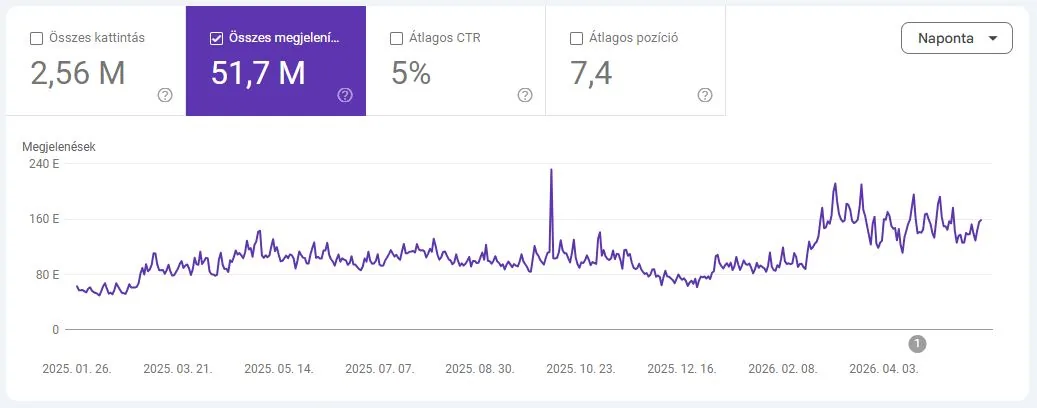
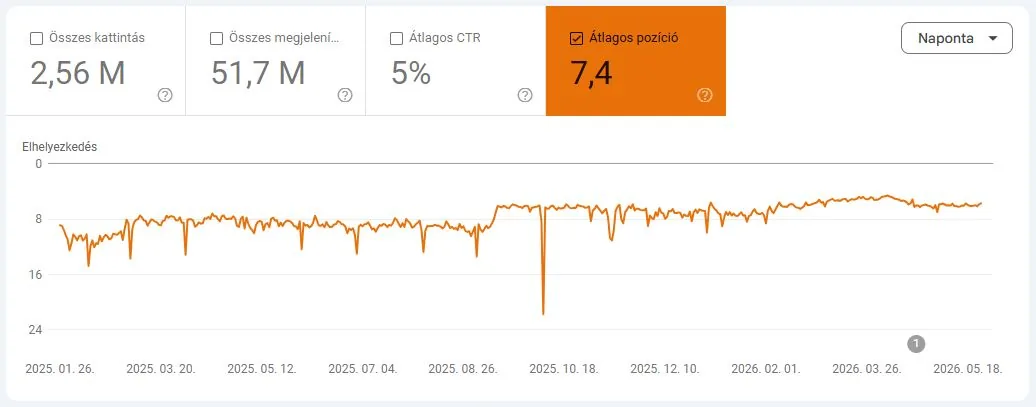
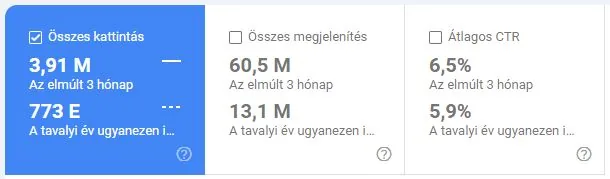
Our client is an online magazine covering agriculture: a WordPress website with a huge number of specialist articles and a relatively large number of visitors. One of our goals was to bring even more visitors to the site from Google search through comprehensive optimisation (without paid ads, of course – purely from natural results, by improving organic positions). Let's look at what we did and what the result was (backed up by numbers).
SEO audit and roadmap
As a first step, every client who requests our search engine optimisation service receives a thorough SEO audit, which examines the site along three main pillars: technical SEO, content (on-page) SEO and off-site SEO (by which we mean link profile analysis), complemented by a competitor analysis. This uncovers all the errors and further potential.
In every case we use software to run a so-called crawl of the site, which follows the internal links to every subpage and evaluates them against various criteria. These include HTML response code errors (for example HTTP 404 URLs, i.e. links pointing to subpages that cannot be found) and meta title and description problems (e.g. missing, duplicated, too long), which need to be fixed.
During the audit we not only use various paid software tools, but also carry out a good deal of manual research, for example checking E-E-A-T. E-E-A-T (Experience, Expertise, Authoritativeness and Trustworthiness) is a very important ranking signal for Google – particularly for sites publishing financial, medical (YMYL – Your Money or Your Life) and expert content, but also for ordinary online stores where card payments are made and personal data is entered. We assessed each criterion against our own checklist.
The outcome of this work is a roadmap (action list) that summarises every existing error and every opportunity to exploit, helping to improve rankings and thereby channel in more visitors from Google sources.
We enter these individual tasks (let's call them tickets) into an online project management tool and assign owners, deadlines and estimated time to them. They are then scheduled in advance within the monthly sprint, and the client is informed about this by email, so our work is fully transparent.
Working through the action list
As this is a large website – containing more than 25,000 articles – there were plenty of problems. We defined almost 50 tickets, and quite a few of them were not 1–2-minute jobs but required an effort measured in tens of hours. Because of the volumes involved, we also needed to bring in a developer, who received detailed bug-fix documentation for every technical issue. We checked the developments in a test environment and, if they were in order, moved them to the live environment.
Our agency puts data-driven decision-making first without exception, so we began optimising the existing content based on the data collected by Search Console. Where we judged it appropriate, we deleted, merged or improved existing articles in many cases (for thin, i.e. short content, we also added unique, quality text).
An important milestone in the project was training the journalists and editors in basic SEO practices so that they could do their work to an even higher standard. We talked to them about keyword research and writing search-friendly text, such as choosing titles, filling in meta tags correctly (title, description), naming images, writing alt texts, using structure and bullet lists, and so on.
A key task every month is to set the topics the editorial team should write about the following month. This, too, is preceded by thorough research that takes seasonality into account.
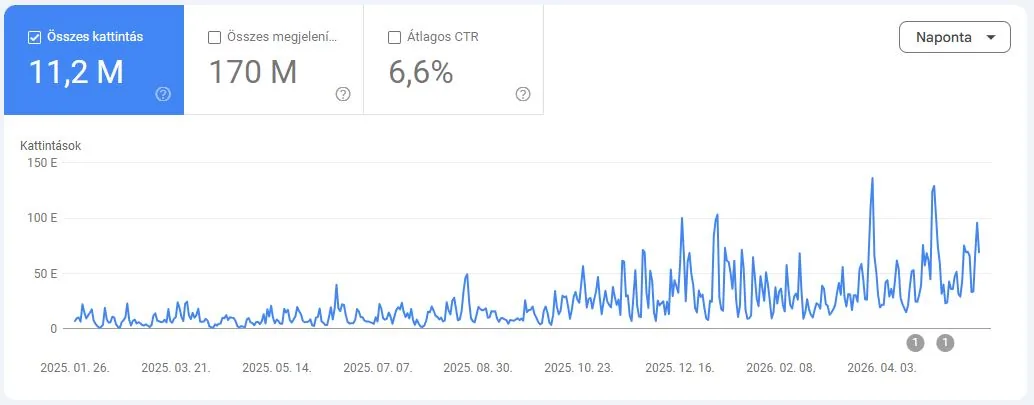
Thanks in part to this close cooperation, rankings began to improve not only in Google's standard search results, but the site also got into Google News, and today Google Discover traffic has become the main pillar of traffic acquisition.
Results
Would you like similar results for your own website?
Request a free consultation: we will review your situation and put together a tailored plan based on your goals.